
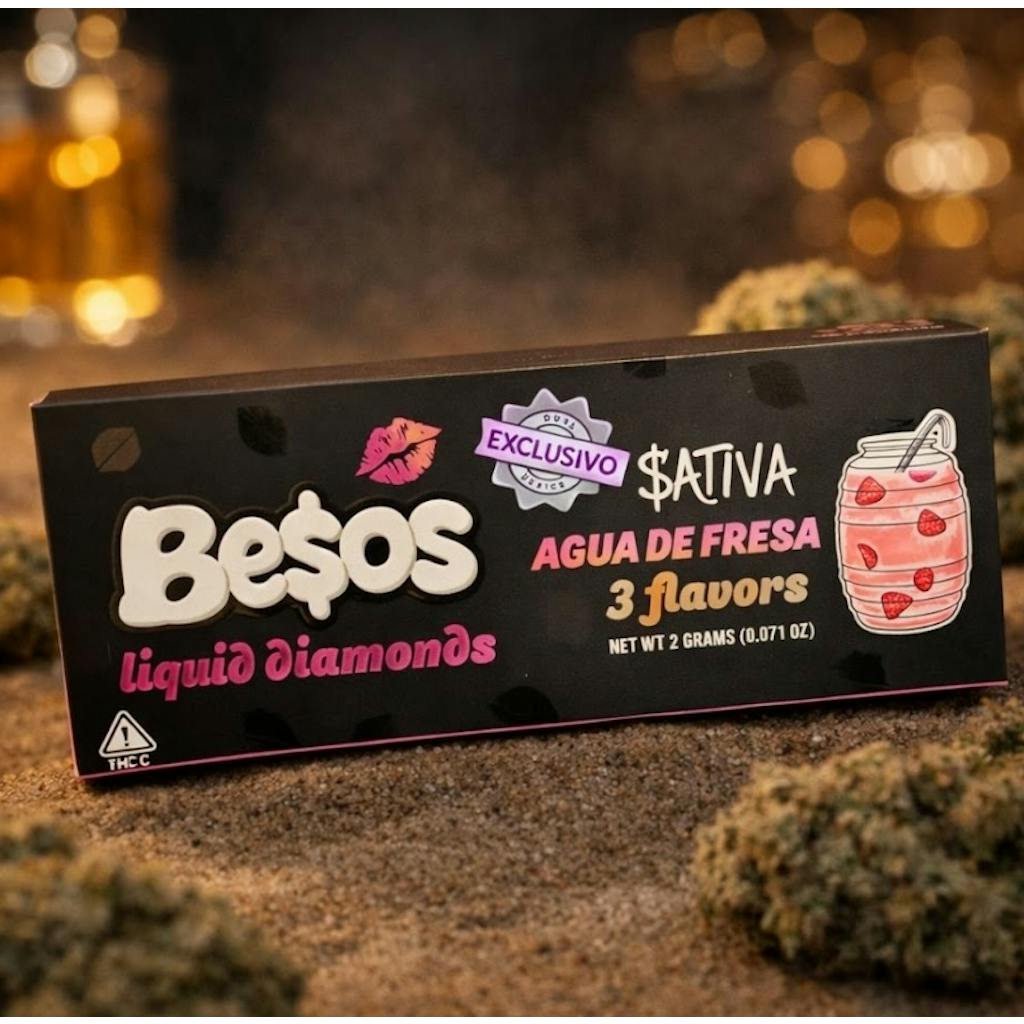
Besos | Agua De Fresa | Live Diamonds Disposable | 2g
$30.00
If you’re seeking an explosion of flavor and unmatched convenience, the Besos Disposable Dual Switch Agua De Fresa is here to upgrade your vaping game. With its vibrant, fruity essence of fresh, juicy strawberries blended seamlessly with refreshing aqua vibes, every puff feels like a ticket to paradise. Say goodbye to boring flavors and hello to your new daily favorite!
Description
Description
How Much Are Besos Carts? Full 2026 Pricing Guide by Format and Quantity
Introduction
How much are Besos carts? The direct answer: a single Besos 2G disposable retails between $23 and $48 depending on where you buy it, which format you choose, and your geographic market. But that single number tells only part of the story — the Besos catalog now spans individual units, 25-packs, 50-packs, 100-packs, Switch multi-flavor devices, and wholesale master cases, each with a significantly different price-per-unit that changes the value calculation completely depending on how you’re buying.
If you’re trying to figure out whether a price you’ve been quoted is fair, too high, or suspiciously low, this guide breaks down every format tier with specific numbers — so you know exactly what legitimate Besos cart pricing looks like in 2026, and what price points should immediately raise a counterfeit flag.
What Is the Besos Cart?
Besos carts are 2-gram liquid diamond THC disposable vapes produced by the Be$os brand, built around a ceramic coil, draw-activation, and USB-C rechargeability. Documented batches carry 89.90–98% THC, which is the primary justification for the price premium over standard distillate disposables in the same category. The lineup includes both all-in-one disposable devices and 510-thread cartridges, with the 2G disposable being the dominant format across all distribution channels.
Understanding Besos cart pricing requires knowing that the product operates in a gray market — the 2G format does not carry California’s licensed dispensary compliance certification, which is why pricing varies more widely than regulated dispensary products and why counterfeit pricing pressure from below-market sellers is a constant market dynamic.
Besos Cart Pricing: Quick Reference
Single Unit Pricing: What to Expect
The most common entry point for new buyers is the single-unit Besos cart, and pricing here varies more than most buyers expect. Here’s what the market currently shows across different channel types:
-
Gray-market online retailers: $23–$25 per unit is the baseline price point across multiple authorized-adjacent online sellers. This is the most widely quoted single-unit price for standard 2G disposable flavors including Birthday Cake, Horchata, Frozen Grapes, and Duvalin.
-
Premium and specialty retailers: $30–$35 per unit is the mid-tier pricing range that reflects retailer markup on standard acquisition cost. This is the range where legitimate gray-market retailers typically price individual units after absorbing shipping and handling costs.
-
Licensed dispensaries (Washington DC, select markets): $42–$48 per unit is the documented price range at regulated dispensary channels that carry Besos products. The compliance overhead and legal operating costs of licensed dispensaries account for the higher price point — but this pricing tier comes with the greatest product verification assurance.
-
Suspiciously low pricing (below $20/unit for single units): Pricing in this range is almost always a counterfeit or low-quality imitation signal. Legitimate Besos cart acquisition costs don’t allow for single-unit retail below $20 while maintaining authentic liquid diamond oil — sellers offering this pricing are either moving fakes or cutting quality somewhere in the supply chain.
Bulk Pricing: The Real Value Case for Besos Carts
The strongest value argument for Besos carts emerges when you look at the bulk format pricing — and the numbers shift dramatically.
25-Pack Variety Box
The Besos 25-Pack Variety Box retails at $240, bringing the per-unit cost down to approximately $9.60 per 2G device. This is the entry-level wholesale format, best suited for small retailers, buying groups, or heavy personal users who have established a preferred flavor mix and want to stock ahead.
50-Pack Variety Box
The Besos 50-Pack Variety Box retails at $480 — same per-unit cost as the 25-pack at $9.60/unit — but delivers 100 grams of total liquid diamond extract across 50 individual devices and includes 50 different strains for maximum variety. The 50-pack also ships in a premium collector’s organization box not included with the 25-pack.
At $9.60 per 2G unit, the cost-per-puff math works out to approximately $0.014–$0.019 per draw based on the 500–700 puff range per device. One documented cost comparison frames this as: $9.60 per device vs. the $3–$5 daily cost of a single-origin coffee — and the 50-pack at bulk pricing extends to approximately $162.50 per month for daily users, comparable to or below what regular vape buyers spend restocking single units.
Retailer Profit Margins at 50-Pack Pricing
At the documented $9.60–$19.50/unit acquisition cost from the 25-50 pack formats, the standard retailer margin model looks like this:
-
Acquisition cost: $9.50–$19.50 per unit (quantity dependent)
-
Standard retail price: $30–$35 per unit
-
Profit per unit: $10.50–$15.50
-
Total profit potential from one 50-pack box: $525–$775
This margin structure explains why Besos carts have penetrated retail distribution so effectively — the economics work at both the buyer and seller level across multiple quantity tiers.
100-Pack Variety Box
The Besos 100-Pack Variety Box brings the per-unit cost to its lowest documented level at $8.00/unit for 100 individual 2G devices. This format is priced at $800 and is explicitly designed for retailer and distributor-level inventory, not personal use. At this quantity, the total liquid diamond extract across the order reaches 200 grams, representing a significant inventory commitment that requires both storage capacity and a reliable retail channel to move the product efficiently.
What Affects the Price You Pay
Several real-world factors cause Besos cart pricing to vary from the baseline numbers above. Knowing these helps you evaluate whether a quote is legitimate or suspicious:
-
Geographic location: Markets with greater dispensary competition or higher cannabis tax environments (like California licensed dispensaries) carry higher retail prices. Gray-market channels in the same region may price 30–40% lower but carry higher authenticity risk.
-
Retailer markup model: Retailers who acquire at 25-pack or 50-pack bulk pricing and sell at single-unit margins operate in the $30–$35/unit range. Retailers selling individual units acquired at single-unit cost typically price higher at $40–$48 to cover their acquisition disadvantage.
-
Flavor and format selection: The Acapulco Gold Edition, Switch 3-flavor device, and Gold Edition hardware variants carry premium pricing over the standard 2G flavor lineup. Specialty releases like the Paleta Pop series also command slight premiums over core catalog items.
-
Market demand and availability: High-demand flavors like Tres Leches and Horchata occasionally price slightly above less-requested options in single-unit markets due to supply-demand dynamics at the distributor level.
-
Promotional and bundle pricing: Some authorized retailers offer promotional pricing or multi-unit bundles for buyers committing to specific flavor mixes — this is legitimate and distinct from the suspiciously low pricing that signals counterfeits.
How Long Does a Besos Cart Last Per Dollar?
Understanding cost-per-use matters more than the sticker price for a product in this category. Based on documented puff estimates:
-
Light users (100–200 puffs/day): A single Besos cart lasts 10–20 days per $23–$35 unit — roughly $1.15–$3.50/day
-
Moderate users (300–500 puffs/day): A single device lasts 5–10 days — roughly $2.30–$7.00/day
-
Heavy users (800+ puffs/day): A single device lasts 2–4 days — roughly $5.75–$17.50/day
At 50-pack bulk pricing ($9.60/unit), every tier above drops to less than half the cost-per-day of single-unit purchasing — the fundamental financial case for bulk buying if you’re a consistent user with a trusted source.
Price Red Flags: When the Cost Signals a Fake
Price is one of the most reliable counterfeit signals in the Besos cart market. Here’s how to read it:
-
Below $20/unit for single units: Not viable at authentic production costs for liquid diamond extract. Almost certainly a counterfeit or significantly degraded imitation.
-
50-pack pricing below $200: Below the documented $9.60/unit acquisition floor for legitimate 50-pack orders. Counterfeit product or misrepresented contents.
-
“50% off” or heavy discount language on premium formats: The Switch device, Gold Edition, and Paleta Pop carry fixed premium pricing. Deep discounting on these formats is a counterfeit targeting pattern — high-value products are used as anchors to move fake inventory.
-
Identical pricing across all flavors at suspiciously low levels: Legitimate Besos pricing has minor variation between standard flavors and premium formats. A seller offering every variant at the same deeply discounted price is typically moving undifferentiated counterfeit stock.
Pros and Cons of Different Price Tiers
Single-Unit ($23–$48):
-
✅ Low commitment entry point for first-time buyers
-
✅ Easiest to verify individual unit authenticity before committing further
-
❌ Highest cost-per-unit across all purchasing formats
-
❌ Frequent restocking creates more authentication exposure over time
25–50 Pack ($240–$480):
-
✅ Per-unit cost drops to $9.60 — 58–75% below single-unit retail
-
✅ Variety box format samples across the full flavor lineup
-
❌ Requires verifying one unit before committing to bulk purchase
-
❌ Larger financial exposure if the source proves to be counterfeit
100-Pack ($800):
-
✅ Lowest documented per-unit cost at $8.00/unit
-
✅ Optimized for retailer and distributor margin models
-
❌ Exclusively viable for retailers — not practical for personal use
-
❌ Highest financial risk if batch quality or authenticity is compromised
Safety and Legal Considerations
Pricing as a health safeguard: The cost-floor information in this guide is not just financial — it’s a safety tool. Counterfeit Besos carts use untested oil that has never been screened for vitamin E acetate, residual solvents, pesticides, or heavy metals. The below-market pricing that counterfeits use to attract buyers reflects the cost savings of skipping lab testing entirely. Treating any below-floor pricing as a health red flag, not just a quality concern, is the right framework.
Legal status and pricing implications: Besos carts contain THC — federally Schedule I in the United States, legal at licensed dispensaries in California and other regulated state markets. Dispensary pricing ($42–$48/unit) reflects the compliance cost of legal operation. Gray-market pricing ($23–$35/unit) reflects the absence of that compliance overhead — and the corresponding absence of state-mandated testing oversight. Understand this tradeoff before choosing a price tier.
Buying Guide: 5 Tips on Price
-
Use $23/unit as your single-unit price floor. Any offer below this for an individual Besos 2G disposable is outside the documented legitimate pricing range and should be treated as a counterfeit signal.
-
Calculate cost-per-use, not just sticker price. A $48 licensed dispensary unit may represent better value-per-puff than a $25 counterfeit that delivers weak, untested oil. The puff count and potency difference between genuine liquid diamond oil and fake distillate fill makes the comparison more nuanced than the price tag alone suggests.
-
Verify one unit before committing to bulk pricing. The per-unit savings at 25-pack and 50-pack levels are compelling, but only if the source is legitimate. Spend $23–$35 on a fully verified single unit before committing $240–$800 to a bulk order.
-
Factor in the Switch premium intentionally. The Switch 3-flavor device pricing reflects genuine hardware complexity — three chambers, LED display, toggle switch. Evaluate whether that functional upgrade justifies the premium over two standard 2G units at $23–$35 each before purchasing.
-
Request a COA before any purchase above $100. For bulk variety box orders, a batch-matched Certificate of Analysis from a verified third-party lab is non-negotiable due diligence before committing to multi-unit inventory.
Common Misconceptions
“Cheaper Besos carts are just less popular flavors at clearance pricing.” Below-floor pricing on Besos carts is not a clearance or overstock phenomenon — there is no documented legitimate clearance channel for this brand. Pricing significantly below the $23/unit floor reflects either counterfeit production economics or severely degraded oil quality. No flavor in the Besos catalog retails below acquisition cost through legitimate distribution.
“The dispensary price is a markup scam.” Dispensary pricing at $42–$48/unit is not arbitrary inflation — it reflects California compliance costs, state taxes, licensed retail overhead, and guaranteed batch-level lab testing. Buyers paying dispensary prices are paying for a verified, tested product in a legally accountable channel. That premium has real functional value that gray-market pricing at $23–$25 doesn’t provide.
“Bulk pricing means the product is wholesale, not retail quality.” The 50-pack and 100-pack variety boxes contain the same 2G liquid diamond extract in the same ceramic coil USB-C device as single-unit purchases. The per-unit cost reduction reflects volume economics, not a quality downgrade. Bulk pricing lowers the acquisition cost without altering the product specification.
FAQ
How much does a single Besos cart cost?
A single Besos 2G disposable retails between $23 and $48 depending on the channel. Gray-market online retailers price at $23–$35. Licensed dispensary channels in markets like Washington DC price at $42–$48. Any single-unit offer below $20 should be treated as a counterfeit signal.
How much is the Besos 50-pack variety box?
The Besos 50-Pack Variety Box retails at $480, bringing the per-unit cost to approximately $9.60 per 2G device. It includes 50 individual units across different strains and ships in a premium collector’s organization box. The 25-pack is available at $240 for the same $9.60/unit rate.
How much is the Besos 100-pack?
The Besos 100-Pack Variety Box is priced at $800, delivering a per-unit cost of $8.00 per 2G device across 100 units and 200 grams total extract. This format is designed for retailers and wholesale distributors, not personal buyers.
How much does the Besos Switch cost?
The Besos Switch 3-flavor device ranges from $200 for a single unit to $1,800 for a bulk case order. The premium reflects the three-chamber architecture, LED display, and toggle switch hardware — genuine functional complexity over the standard 2G format.
How much is the Besos Acapulco Gold cart?
The Acapulco Gold variant is priced at $23 per unit at the low end, scaling up to $1,000 for large quantity orders, with documented pricing at $25 per unit for standard single-unit retail. Master case bulk pricing scales on a per-unit basis with quantity breaks at 5, 10, 20, 25, 50, and 100 units.
Why do Besos cart prices vary so much between sellers?
Geographic market conditions, retailer acquisition costs, compliance overhead, and counterfeit competition all drive price variation. Licensed dispensary channels price higher due to legal operating costs and guaranteed lab testing. Gray-market sellers price lower but without the compliance assurance. Below-floor pricing below $20/unit typically reflects counterfeit production economics.
Are cheap Besos carts worth buying?
Only if they clear the authenticity verification threshold — batch number cross-check, oil color inspection, and COA confirmation. A cheap authentic Besos cart from a source that passes verification is fine. A cheap Besos cart that fails any verification step is not worth buying at any price — the health risk from untested counterfeit oil is the real cost of that discount.
What is the retailer profit margin on Besos carts?
At 50-pack acquisition pricing of $9.50–$19.50/unit, retailers selling at the standard $30–$35 single-unit retail price generate $10.50–$15.50 profit per unit, with total profit potential of $525–$775 per 50-pack box. This margin structure is what drives the product’s penetration into gray-market retail distribution.
Final Thoughts
The answer to “how much are Besos carts” ranges from $23 for a single unit to $8.00/unit at 100-pack scale — a spread that reflects genuine value engineering across quantity tiers, not arbitrary pricing. For personal buyers, the $23–$35 single-unit range is the legitimate benchmark, with dispensary pricing at $42–$48 representing the verified, compliance-tested premium. For retailers and bulk buyers, the 25–100 pack formats deliver economics that meaningfully outperform single-unit restocking at every frequency level.
Price is both a value guide and a safety filter in this market. Know the floor, apply it consistently, and verify before committing to any purchase above single-unit scale. That combination of price awareness and authentication habit is what separates smart Besos cart buying from costly mistakes.
Delivery Info
- Standard and Express delivery services are available for all items.
- Shipping costs are calculated at the checkout page (after delivery option & destination confirmation).
- Tracking is available for all delivery options.
- Items are delivered during standard business hours.


Reviews
There are no reviews yet.